


Salt or chlorine pool in Mallorca: which one makes sense
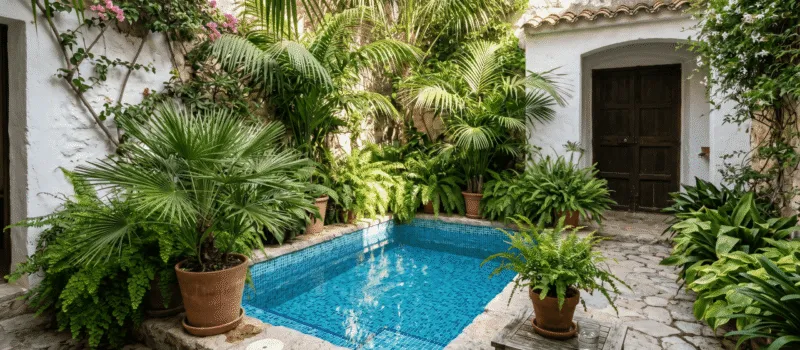
Salt or chlorine is the classic question when building or renovating on Mallorca, and the short answer is that salt pays off here more than in most places, because summer heat punishes manually dosed chlorine. Here are the real costs, upsides and drawbacks.
Key takeaways
- Salt system installed: 1,200 to 2,500 euros; annual chemicals roughly halve
- Typical break even between year 3 and 5
- A salt pool still sanitises with chlorine: the cell produces it steadily
- In Mallorca heat salt holds levels where manual chlorine burns off in hours
How each system works
With traditional chlorine you buy and dose product weekly. With salt chlorination the water carries dissolved salt at low concentration, a tenth of seawater, and an electrode cell generates chlorine continuously. Both pools are chlorine sanitised; what changes is who makes it.
The numbers on Mallorca
Installed salt system: 1,200 to 2,500 euros. Chemicals with manual chlorine: 300 to 500 euros a year, roughly half that with salt, plus a replacement cell every 4 to 7 seasons. Break even usually lands between year three and five. In July and August heat the chlorinator holds stable levels where manual chlorine burns off in hours, exactly the scenario that ends in green water.
Honest pros and cons
For salt: softer water on skin and eyes, less product handling, stable summer levels and fewer emergency visits. Against: the upfront cost, the cell is a consumable, and salt systems demand disciplined pH control, ideally automated. For chlorine: zero upfront cost and every maintenance company knows it.
Our recommendation
On a new build, specifying salt from the start is almost always right; on existing pools with heavy use, conversion pays for itself. Full costs by type are in the pool cost guide, and for numbers on your pool, request vetted quotes.
| Aspect | Salt chlorination | Manual chlorine |
|---|---|---|
| Upfront investment | 1,200 to 2,500 euros installed | None |
| Chemicals per year | Roughly half the manual bill, plus salt top ups | 300 to 500 euros |
| Wear parts | Replacement cell every 4 to 7 seasons | None |
| Stability in summer heat | Holds stable levels through July and August | Burns off in hours at peak heat |
| Handling | Less product handling, needs disciplined pH control | Weekly buying and dosing |
| Break even | Between year 3 and 5 | Not applicable |
Salt or chlorine in Mallorca, which is better?
For most private pools with heavy summer use, salt chlorination pays off: fewer chemicals to buy, softer water and more stable maintenance in the heat. Manual chlorine still wins on upfront cost.
What does converting to salt cost?
An installed system costs 1,200 to 2,500 euros for a typical private pool. In return, annual chemical spend roughly halves.
Does a salt pool contain chlorine?
Yes: the chlorinator generates chlorine from dissolved salt. The difference is continuous, stable production without handling or storing product.
Conclusion
In Mallorca heat a salt system keeps chlorine levels stable where manual dosing burns off in hours, and the 1,200 to 2,500 euro investment typically pays for itself between year 3 and 5. Both systems sanitise with chlorine; the difference is who makes it. To compare installation prices, request free quotes from vetted builders.
This might be interesting to you
7 signs your Mallorca pool needs renovating
Cracks, leaks, rough surfaces or dated tiles? Seven clear signs your Mallorca pool is due for renova...
Why September Is the Best Month to Book a Pool Renovation on Mallorca
The season winds down, the builders open their calendars and the weather still cooperates. The case ...
Community pools in Mallorca: rules, costs and liability
Sanitary duties, annual costs and how the assembly decides: the guide for owner communities in Mallo...

What does it cost to fill a pool in Mallorca?
Filling an 8x4 pool costs about 100 to 150 euros, but drought rules and evaporation change the maths...